

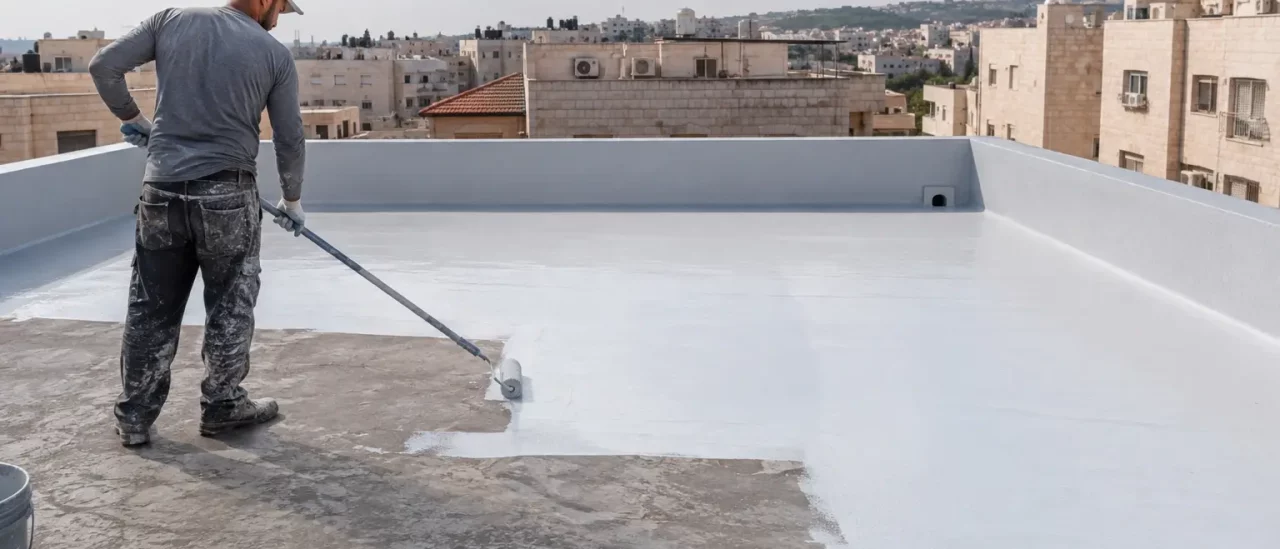
When you look into the types of roof insulation in Jordan, you will come across many names — waterproofing, thermal insulation, bitumen membranes, insulation boards and foam. But the right choice does not start with the name of a material. It starts with the problem you want to solve, the condition of the roof, how it is used, and how exposed it is to rain and sun.
A roof may only need to keep rainwater out, or the main problem may be heat on the top floor — and in many cases the building needs a system that does both. This guide explains the difference between the common systems and when each one suits homes and buildings in Amman and the other governorates of Jordan.
Quick answer: what is the best type of roof insulation?
No single type is best for every roof. Waterproofing is the right choice when the priority is keeping out rain and damp, while thermal insulation limits how much of the sun’s heat passes into the building. Polyurethane foam can provide good thermal insulation and form a continuous layer, but it needs correct installation and a suitable protective coat, depending on the system. On some projects, the best solution is a combined system that brings waterproofing and thermal insulation together.
Waterproofing, thermal insulation and foam: the differences
| Type | Main purpose | Usually suits | What to watch for |
|---|---|---|---|
| Waterproofing | Stopping rainwater and damp getting through the roof | Roofs with leaks or pooling water | Treating cracks, drains and falls before application |
| Thermal insulation | Reducing heat transfer to the top floor | Homes and buildings with heavy sun exposure | Needs a system that protects it from water and weather |
| Polyurethane foam | Thermal insulation as a continuous layer, with properties that depend on the system | Roofs with many details, or where even coverage is needed | UV protection, the right thickness and quality of work |
| Combined waterproofing and thermal system | Protection from rain and heat together | Exposed roofs and top floors | Compatible layers in the right order, with precise detailing |
1. Roof waterproofing
Waterproofing forms a barrier that stops rainwater reaching the layers of the roof. It is used when damp patches appear on the top-floor ceiling, paint flakes after rain, the old waterproofing has cracked, or water pools around the drains and edges.
The most common waterproofing systems
- Bitumen membranes: fixed to the roof to form a waterproof membrane; their success depends on the quality of the laps and how the edges and drains are treated.
- Cementitious waterproofing: used in many situations, and effective when the roof is well prepared and joints and cracks are treated before application.
- Liquid membranes and coatings: they form a continuous layer and help cover the details, but the product, thickness and number of coats must suit the condition of the roof.
- Liquid polyurethane systems: they give a flexible continuous layer when applied to a clean, dry base according to the system’s requirements.
A material alone cannot fix poor falls or a blocked drain. Before installing any system, the roof must be inspected, cracks repaired, weak sections secured, the base cleaned, and the junctions with the edges, tank bases and air-conditioner bases treated.
2. Roof thermal insulation
Thermal insulation reduces how much of the sun’s heat passes through the roof, which matters especially for the top floor. A well-designed and well-installed system can make the home more comfortable and reduce the load on the air-conditioning, but the result depends on the material’s thickness, the roof construction, the window area, ventilation and the quality of the work.
Common thermal insulation materials
- Expanded or extruded polystyrene boards: lightweight and available in different thicknesses; they must be protected within a suitable system.
- Rock wool boards: they provide thermal and acoustic performance, and need correct detailing to protect them from moisture.
- Sprayed polyurethane foam: it fills gaps and forms a continuous layer; the thickness is set by the goal and the project conditions.
Thermal insulation is not an automatic substitute for waterproofing. If insulation boards or inner layers are exposed to water, the system’s performance can drop or the finishes can be damaged. That is why the order of the layers, the drainage and the final protection must be decided before work begins.
3. Roof foam insulation
Foam insulation usually means spraying polyurethane onto the roof to form a lightweight, continuous layer. Its advantages include covering corners and details and reducing joints, as well as its thermal properties. Even so, it should not be treated as a quick fix applied to any roof without preparation.
- The base must be clean, stable and free of moisture that would stop it bonding.
- Cracks, falls and drains need separate repair before spraying.
- The thickness must be controlled, with no thin areas around pipes and edges.
- Some systems need a protective coat against sun and weather.
- Roofs with heavy foot traffic may need mechanical protection or a suitable finish.
How to choose the right roof insulation in Jordan
1. Identify the problem before choosing the material
If damp appears after rain, the cause may be weak waterproofing, the drains or the edge details. If the damp continues even on dry days, the water pipes or tanks should be checked before covering the roof with a new layer. See also the signs of failed roof waterproofing before the rainy season.
2. Check the condition of the roof and its falls
Even the best materials will not work on crumbling concrete or an old layer that has come away. Water standing in low spots also puts pressure on the waterproofing and exposes any weakness in the laps or details. Start by clearing the drains and checking the falls, tank and air-conditioner bases, and the joints.
3. Consider how the roof is used
A roof that is not used is different from one with tanks, solar panels or frequent maintenance traffic. The more traffic, the greater the need for a protective layer that withstands walking and tools and does not let the waterproofing membrane get punctured.
4. Do not choose on the price per square metre alone
A proper comparison covers roof preparation, crack and fall repairs, the type and thickness of material, the number of coats, detailing, the protective layer and how the work is checked afterwards. A quote may look cheaper simply because it leaves out essential parts of the system.
When do you need waterproofing and thermal insulation together?
The top floor usually benefits from a system that combines protection from water with reduced heat, especially when the roof is exposed all year round. This can be done with different build-ups depending on the roof construction and the materials chosen, which is why the layers should be reviewed as one system rather than as separate products. The aim is to keep water away from the thermal insulation, while protecting the waterproofing membrane from movement and sun, according to the system design.
Common mistakes that shorten the life of roof insulation
- Applying the material over dust, damp or an old layer that has come away.
- Covering cracks from outside without knowing why they move.
- Neglecting the falls and areas where water pools.
- Not turning the waterproofing up the edges to the height the system requires.
- Leaving tank bases, pipes and drains without sealed details.
- Walking on the insulation or installing equipment on it without protection.
- Accepting the work without checking the layer and making sure the drainage works.
For more detailed steps on preparing the roof, see our guide to waterproofing roofs against rain in Jordan before winter.
Frequently asked questions about types of roof insulation
Can new insulation be applied over the old insulation?
Sometimes, after an inspection — but not always. If the old layer has come away, has moisture underneath or the base is weak, covering it may only hide the problem for a while. The decision depends on how well the layers are bonded, whether the materials are compatible and the condition of the roof.
Can white paint replace thermal insulation?
A reflective coating can help reduce how much of the sun’s heat the roof absorbs, depending on its properties and the roof, but it does not necessarily do the job of a thermal insulation layer with the required thickness and resistance. It should be assessed as part of the roof system, not as a complete substitute.
Does foam stop rain leaks?
It depends on the type of foam, its density and thickness, the protective coat and the details around it. You cannot assume that spraying foam alone treats every leak — the drains, falls, cracks and edges need to be dealt with as part of a complete system.
When should roof insulation be inspected?
It is best to inspect before the rainy season, after installing a tank, an air-conditioner or solar panels, and whenever cracks, bulges, damp patches or pooling water appear. Acting early is easier than waiting for the damage to reach the top-floor ceiling.
In summary
Choosing a type of roof insulation is a technical decision that depends on the cause of the problem, the condition of the base, the climate and how the roof is used. Waterproofing keeps out rain and damp, thermal insulation reduces heat transfer, and foam offers useful properties when it is installed as part of a proper system. On many buildings in Jordan, the balanced solution is to combine waterproofing and thermal protection — after first treating the falls, drains and details.
Need your roof inspected and the right system chosen?
See the roof waterproofing service in Amman and Jordan from Al Tamayuz, or contact us to arrange an inspection and identify the cause of the problem before choosing a material.