

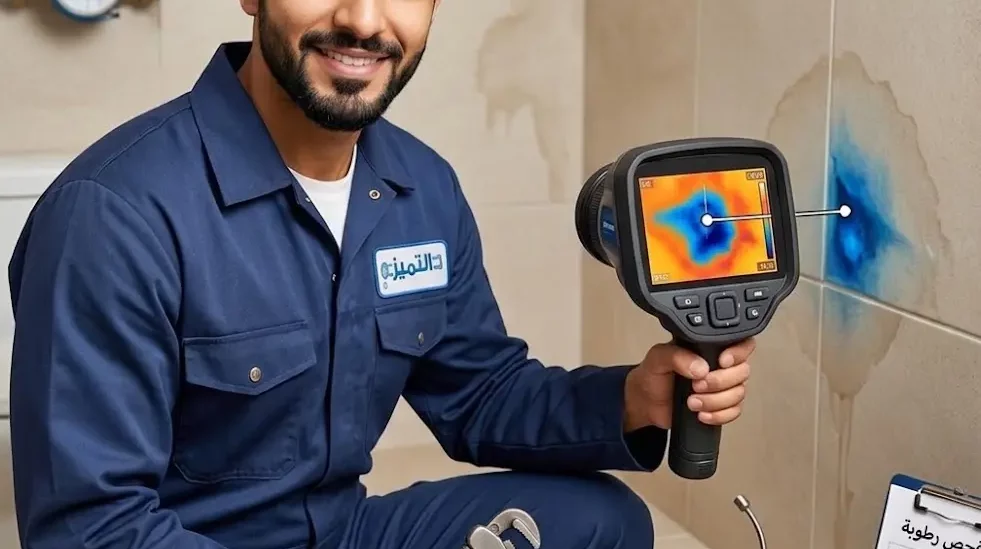
A bathroom leak is one of those problems that can start small and then spread to the walls or the ceiling of the floor below. The difficulty is that the source is not always obvious — it may be a water line inside the wall, the drainage, the shower area or weak waterproofing. That is why bathroom leak detection without unnecessary breaking starts with the right diagnosis before any tiles or walls are opened.
In this guide we explain the main signs, causes and steps that help identify the type of problem, and when you need a specialist inspection from a water leak detection company in Amman and Jordan.
The main signs of a bathroom leak
- A damp patch on the ceiling of the room below the bathroom.
- Flaking paint or bulging plaster on the wall next to the bathroom.
- A damp or musty smell that will not go away.
- A higher water bill with no clear reason.
- The water meter moving with the taps closed.
- Discoloured grout between the tiles, or constant damp around the shower.
- Leaks around the base of the toilet or under the basin.
- The sound of water inside the wall when nothing is in use.
What causes bathroom leaks?
There is no single cause for every case. The right diagnosis depends on where the water appears, when it appears and how the bathroom is used.
1. A leak in the water supply lines
It may come from a joint or a pipe inside the wall or under the tiles. Because the line is pressurised, the leak can continue even when the bathroom is not in use.
2. A leak in the drainage
It may only appear when the basin or shower is running or the toilet is flushed, so it behaves differently from a constant supply-line leak.
3. Weak bathroom floor waterproofing
If the problem gets worse after showering or when water pools on the floor, there may be a fault in the waterproofing or the joints around the shower.
4. A problem around the toilet or basin
Flexible connectors, valves, the trap or the toilet base can be a visible or half-hidden source of the leak.
How is a bathroom leak found without breaking?
“Without breaking” does not mean every case can be solved without opening anything. It means the aim is to avoid random breaking and pinpoint the area closest to the problem before the repair begins.
- Visual inspection: checking the connectors, valves, trap, toilet and damp areas.
- Watching the meter: to help show whether water is being lost from the network.
- Pressure testing the network: when a hidden water line is suspected.
- Use testing: watching whether the problem appears while the shower, basin or toilet is in use.
- Moisture measurement: to see which way the water is spreading inside the wall or floor.
- The right detection tools: such as acoustic listening or thermal imaging, where they help.
How do you know whether it is the pipes or the waterproofing?
If the leak continues when the bathroom is not in use, or the water meter moves with every outlet closed, a water-line leak is more likely. If the damp mainly appears after showering or after washing the bathroom floor, the problem is more likely to be the waterproofing or the drainage.
These are clues, not a final diagnosis. If the damp is near the ceiling or linked to rain, read our guide to the difference between a pipe leak and a rain leak.
Can a thermal camera find a bathroom leak?
A thermal camera can help show temperature differences linked to damp in some cases, but it is not suitable or sufficient for every leak. The best result comes from combining several clues: the symptoms, the meter, the pressure, the moisture readings and how the bathroom is used.
When should you ask for a specialist inspection?
- When the damp continues and you do not know where it is coming from.
- When damage appears on the ceiling of the floor below.
- When the water bill rises for no clear reason.
- When you want to avoid breaking expensive tiles or finishes.
- When surface repairs have been repeated and the problem has not gone away.
If you are in Amman, see also our service pages for Khalda, Tla’ Al-Ali and Sweileh.
Frequently asked questions about bathroom leaks
Can a bathroom leak be caused just by the trap?
Yes — sometimes the problem is the basin trap or a visible connection. But this should be confirmed before assuming there is a leak inside the wall.
Do all the bathroom tiles need to come up to fix a leak?
Not necessarily. It depends on the type and location of the problem. Diagnosing before repairing can help limit the work to a smaller area.
Can a higher water bill be caused by the bathroom?
Yes, especially if there is a constant leak in a water line, a cistern or a connection that keeps losing water.
Book a bathroom leak inspection
If you have noticed damp, a higher bill or a leak below the bathroom, contact Al Tamayuz on 0799 747 365. Tell us when and where the problem appears, and we will help you choose the right inspection before any breaking or repair begins.