
Water leak detection: protecting our homes and our health
Water leaks are a common problem in many homes and buildings. If a leak is not treated quickly and effectively, it can damage the structure and lead to serious health problems. That is why early detection is essential to protect both property and the people living in it.
The benefits of leak detection
- Protecting the structure: leaks can damage foundations, walls and floors and weaken them over time.
- Preventing accidents: leaks can leave puddles inside the home or building, increasing the risk of slips and falls.
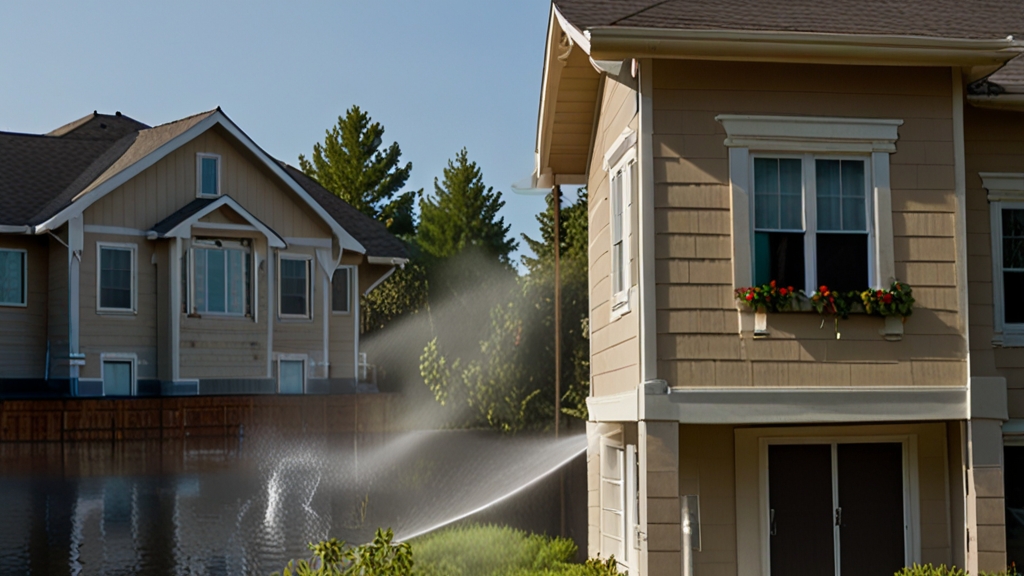
- Limiting environmental damage: leaks can contaminate groundwater and damage plants and land around buildings.
- Saving money: finding a leak early avoids major repairs that can be very expensive.
- Better air quality: leaks encourage mould and fungi, which cause unpleasant smells and affect the air indoors.
Leak detection methods
- Visual inspection: looking for signs of a leak such as cracks in walls or peeling paint.
- Modern technology: ultraviolet detection, thermal imaging and radar help locate the leak precisely.
- Pipe inspection: small cameras are used to look for leaks inside pipes.
- Detection devices: sensors, acoustic detectors and moisture meters help pinpoint where the leak is.
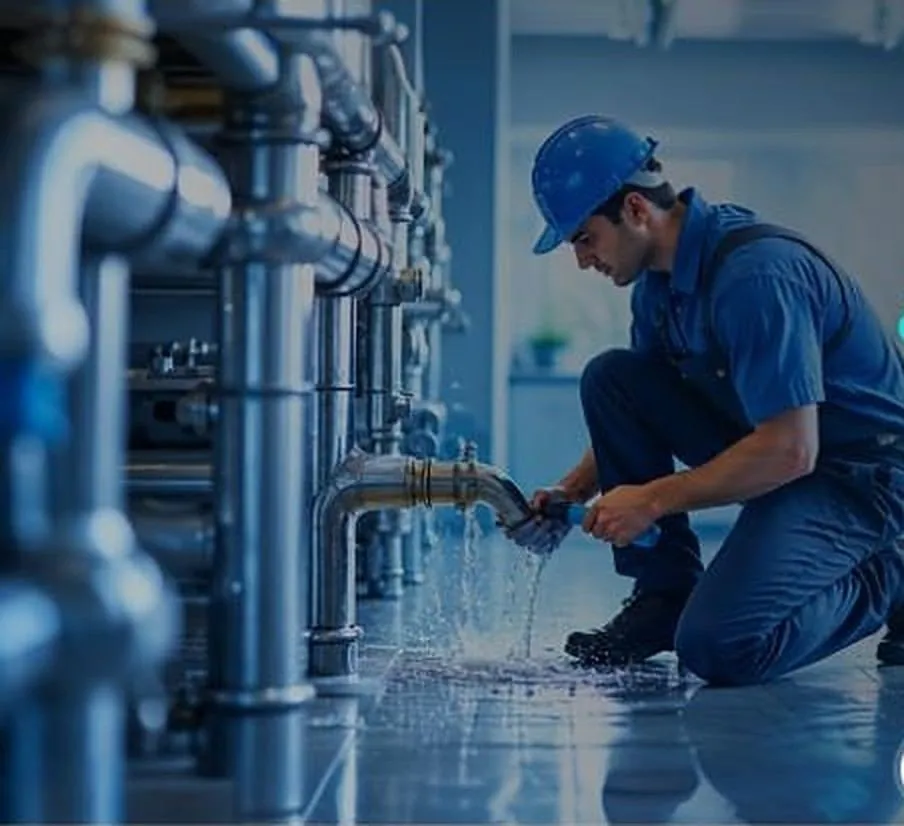
- Relying on experts: maintenance and plumbing specialists can find and repair leaks effectively and accurately.
New technologies in leak detection
- Digital technology: smart sensors and remote monitoring systems detect leaks and pinpoint their location, providing accurate data for decisions.
- Artificial intelligence: AI analyses data more precisely, making it easier to find leaks and recommend preventive maintenance.
- Satellite sensing: satellite images can be analysed to identify possible leak areas on a large scale, helping to target detection and maintenance.
Technology in the service of leak detection
- Advanced devices: modern detection devices use the latest technology, improving accuracy and reducing errors.
- Smartphone apps: apps help monitor water use and flag possible leaks, making remote monitoring easier.
- Optical and thermal analysis: these techniques detect changes in temperature and moisture, locating leaks faster and more accurately.
Optical and thermal analysis
These techniques measure changes in temperature in the suspect area. Infrared imaging analyses the heat given off by surfaces and materials to identify the points that may be the source of a leak. Even small temperature changes can be detected, so leaks are found faster and more accurately.
Remote sensing data
Remote sensing uses satellites and drones to collect data from large areas. The data is analysed with specialised software to identify suspect areas and changes in moisture patterns. This is especially useful in large or remote areas that are hard to reach with traditional inspection.
Fibre-optic sensing
This technique uses sensitive optical fibres placed in areas where a leak is likely. When the moisture level changes, the sensor records the change and sends an alert. It can be used in walls, floors and even under tiles, which makes it effective in places that are hard to reach.
Emerging technology
Leak detection technology keeps improving. Research into artificial intelligence and wireless networks is producing more advanced detection systems that improve accuracy and reduce the time and effort needed to repair leaks.
Making the most of modern technology
With modern leak detection, homeowners and businesses benefit from more accurate and effective tools to find leaks and limit the damage — saving time, effort and repair costs while protecting property and the environment.
Conclusion
A water leak is not a small problem to be ignored — it is a real risk to property and public health. With modern technology and the help of specialists, homeowners and businesses can protect their property and save money in the future, so it pays to deal with leaks quickly and effectively.
Contact Al Tamayuz to solve all your water leak problems and get professional leak detection.