
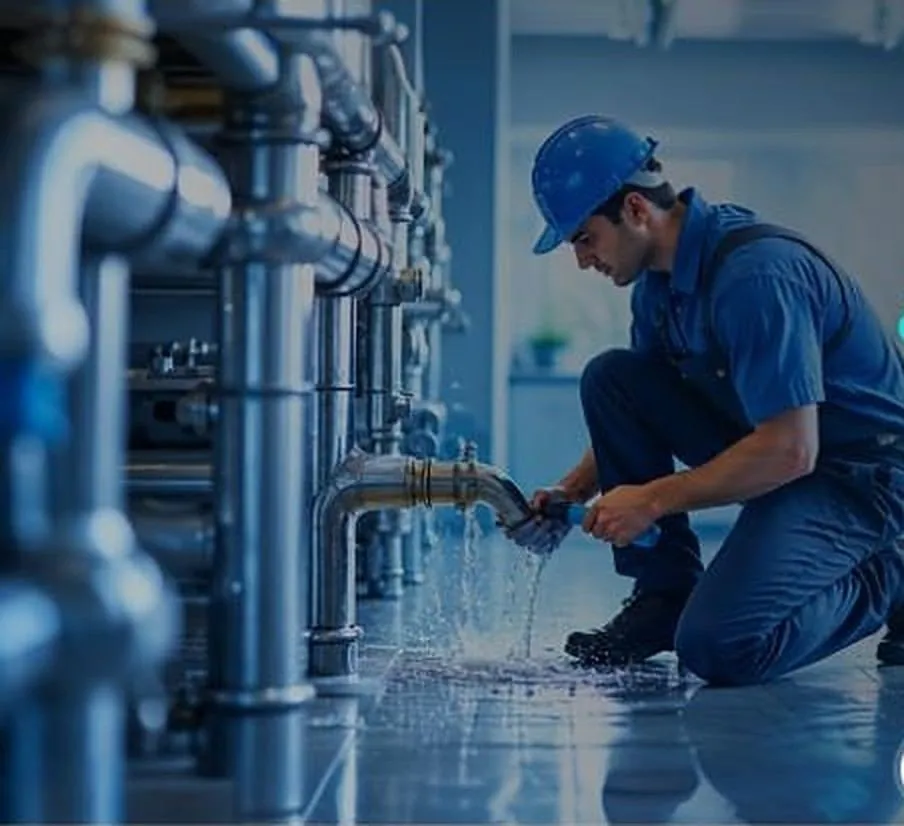
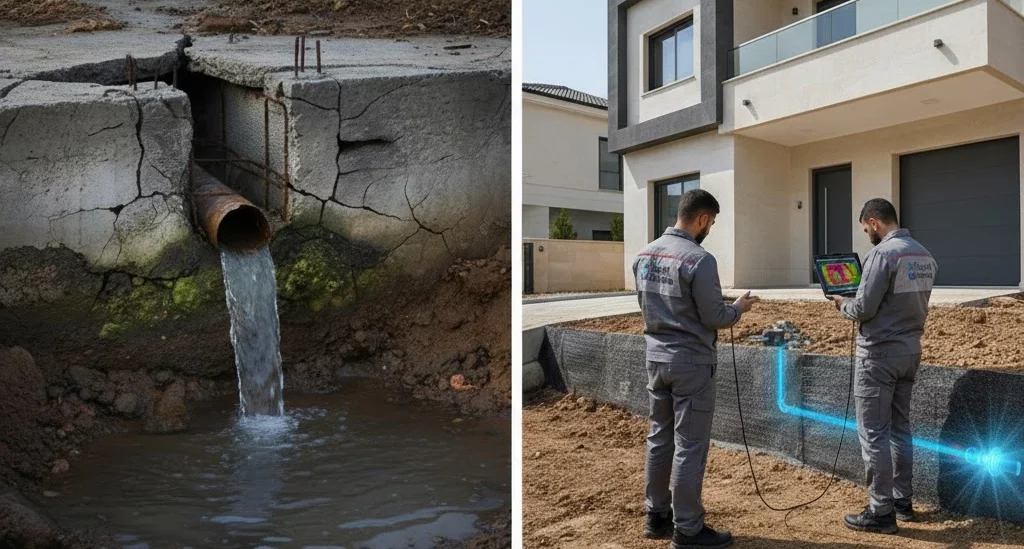
In Amman, where modern buildings are intertwined with older infrastructure, underground water leaks are a hidden threat that quietly reaches the foundations of homes and streets. It may look minor at first — a small stain or a damp smell — but it is often the start of a chain of damage to buildings, health and finances.
1. Serious structural damage
Leaks usually start with a small damaged pipe underground, but over time they lead to corrosion of the concrete and steel that form the building’s foundations.
Constant damp weakens the structure, causes cracked walls and foundations, and in some cases leads to partial subsidence under the tiles or in building walkways.
In Amman in particular, where the soil has a high clay content and seasonal moisture, a continuing leak makes foundations lose their cohesion quickly, increasing the risk of partial collapse or deep cracks.
2. Direct and hidden financial damage
Every drop that leaks is money lost without you seeing it.
A small leak in an underground pipe can raise the water bill by 30–40% a month, especially when it is not found early.
Over time, the cost of repairs, repainting, mould removal and replacing floors adds a double financial burden on families.
Many Amman residents have seen their bill drop by hundreds of dinars after a leak was repaired — proof that early detection is not a luxury but a real investment in your home.
3. Unexpected health damage
The damp caused by leaks is the ideal environment for mould and fungi, especially in enclosed areas such as basements or behind walls.
These fungi release airborne spores that cause allergies, coughing and shortness of breath, and can affect children and the elderly in particular.
Persistent damp in the walls can also lead to bacteria and unpleasant smells that are hard to get rid of, even after restoration.
4. The effect on public infrastructure in Amman
When water leaks into the soil from main network pipes or household pipework, it does not only damage the building — it also erodes roads and pavements and increases the risk of potholes and small collapses in the streets.
A simple household leak can therefore become a wider municipal problem affecting traffic and public services.
5. The environmental cost: wasting Jordan’s most precious resource
Jordan is one of the most water-poor countries in the world, yet huge amounts are wasted every day through invisible leaks.
Imagine that a tiny leak — one drop a second — can waste more than 700 litres a month, enough to cover a small family’s needs for a week.
In a country facing drought, every litre wasted is a national loss.
How to avoid this damage
- Check the water meter regularly and watch for any unexplained consumption.
- Watch walls and floors for damp or changes in colour.
- Use specialist companies that rely on thermal or acoustic detection instead of random digging.
- Insulate underground pipes and have them maintained every year.
- Do not delay an inspection when you see any sign — delay doubles the damage and the cost.
In short
An underground leak is not a “minor fault” — it is a silent threat that can damage your home’s foundations, strain your budget and threaten your health.
In an environment like Amman, with high humidity and changing soil, early detection is the smart way to avoid losses.
Protect your home and call in experts in modern leak detection — without breaking or mess.
Call now: 0799 747 365 to book a precise, professional inspection that protects your home and lowers your consumption.