
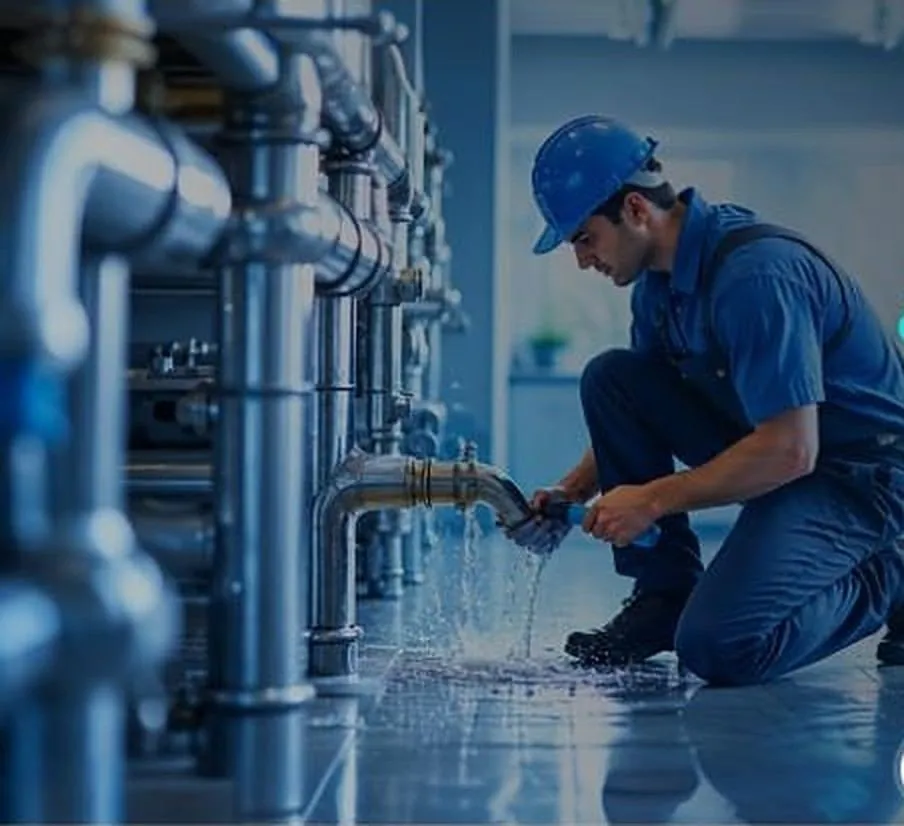
Introduction

Water leak detection is an essential service in Jordan, a country facing serious challenges with water scarcity and high temperatures, which can damage water networks and make leaks more likely. Whether you own a home or run a business, detecting leaks early can save money, protect your property and limit the waste of precious water.
In this complete guide we look at the common signs of a water leak, the best do-it-yourself and professional detection methods, and effective prevention tips, with a focus on why they matter in Jordan. We also explain how modern technology helps detect leaks and reduce potential damage.
Common signs of a water leak
A leak can cause serious damage if it is not found early. Here are the signs to watch for:
1. An unusually high water bill
If your water bill has gone up for no reason while your consumption has not changed, a hidden leak in the pipes or appliances may be the cause.
2. Low water pressure at the taps
Low pressure can point to an internal leak where water is lost before it reaches the taps.
3. Damp patches or discoloured walls and ceilings
Damp patches or changes in the colour of paint or walls can be evidence of a continuous leak inside the walls or ceilings.
4. Mould or unpleasant smells
The excess moisture from a leak can lead to mould, which can cause health problems such as allergies and respiratory illness.
5. Unusual sounds (running or dripping water)
If you hear water running or dripping when no water is being used, there may be a leak in the pipes.
6. A water meter that keeps turning when nothing is in use
Test the meter by turning off every water outlet, then watch it. If it keeps turning, there is a leak that needs repairing.
Do-it-yourself leak checks
Before calling in professionals, you can run a few simple tests yourself:
1. The water meter test
- Turn off every tap and appliance that uses water.
- Watch the meter for 15–30 minutes.
- If the reading changes, there may be a leak.
2. The toilet leak test
- Put a few drops of food colouring in the toilet cistern.
- Wait 10–15 minutes without flushing.
- If the colour appears in the bowl, the internal valve is leaking.
3. Checking taps and appliances
- Look for drops of water around taps, water heaters, showers and washing machines.
- Make sure there is no unexplained wetness under sinks or near appliances.
4. Checking the garden irrigation system
- Inspect irrigation pipes and sprinklers for leaks or cracks that waste water.
Professional leak detection methods and technologies
When a leak is hidden or complex, you can rely on specialist leak detection companies that use advanced technologies, including:
1. Acoustic detection
Sensitive acoustic devices pick up the sound of water flowing inside walls or underground, helping to find the leak precisely.
2. Infrared thermal imaging
Thermal cameras detect temperature changes, helping to locate the leak without breaking walls or floors.
3. Pipe pressure testing
The water pressure inside the pipes is measured to see whether there is an unexplained loss that points to a leak.
4. Internal camera inspection
A small camera is inserted into the pipes to look inside and find any cracks or holes.
5. Smart detection systems
These modern systems provide real-time monitoring of water use with advanced sensors that alert you as soon as an abnormal leak or fault is detected.